

Bahareh Khezri (ICREA at URV)
Community Events
114th ICREA Colloquium
The Role of Nanobots in the Future of Nanomedicine and Environmental Remediation


Samuel Sánchez-Ordóñez (ICREA at IBEC)
ICREA Research Professors Bahareh Khezri at Universitat Rovira i Virginli (URV) & Samuel Sánchez-Ordóñez at Institut de Bioenginyeria de Catalunya (IBEC)
25th February 2025 at 6pm
Place: Auditori FCRI
Bahareh Khezri – ‘Synthetic Nano/Microrobots: Revolutionizing Environmental Sensing and Remediation’
Addressing growing environmental concerns driven by industrialization and population growth, prof. Khezri research focuses on developing synthetic nano/microrobots as next-generation tools for pollutant detection and remediation. Utilizing 2D materials, advanced photocatalytic systems, and autonomous sensing platforms, they achieve self-propulsion, high reactivity, and versatile functionality for applications like water purification and pollution monitoring. This presentation highlights breakthroughs in light-activated, polymeric, and 2D nanostructure-based microrobots for energy harvesting, contaminant degradation, and real-time monitoring, while emphasizing sustainable materials and eco-friendly fabrication. These advances showcase the transformative potential of nano/microrobots for scalable and sustainable environmental solutions.
Samuel Sánchez – ‘The Role of Nanobots in the Future of Nanomedicine’
Engineering medical nanomotors/nanobots will imply the use of biocompatible materials and bio-friendly propulsion mechanisms. The strategy in his lab comprises the use of biocatalysts such enzymes for converting biologically available fuels, such as the urea contained in the urine, into a propulsive force. Moreover, nanoparticles’ chassis are generally recognized as safe (GRAS) material, FDA or EMA approved materials.
In his talk, Samuel presented how we bioengineer hybrid nanobots combining the best from the two worlds: biology (enzymes) and (nano)technology (nano- micro-particles) providing swimming capabilities, biocompatibility, imaging, multifunctionality and actuation in vitro and in vivo. He also presented some of the proof-of-concept applications of biocompatible nanobots such as the efficient transport of drugs into cancer cells and 3D spheroids, the imaging of swarms of nanobots in vivo in confined spaces like the bladder of living mice. Moreover, he shared his recent advances in the treatment of bladder cancer in mice using radionuclide-labelled nanobots and crossing mucus layers present in the colon of mice.
115th ICREA Colloquium
Similarities and differences of memory coding across species
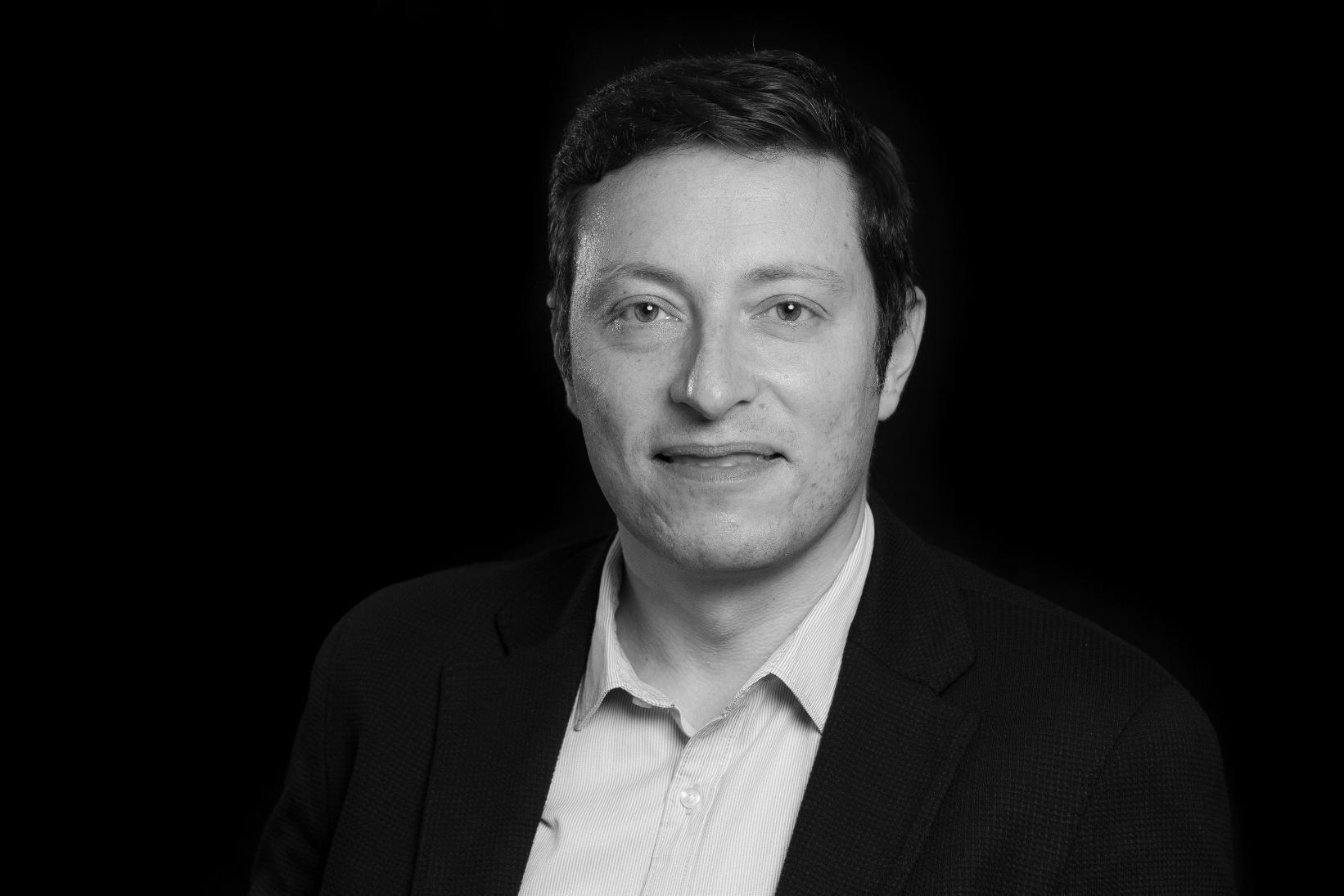
Raül Andero (ICREA at UAB)

Rodrigo Quian Quiroga (ICREA at HMRIB)
ICREA Research Professors Raül Andero at Universitat Autònoma de Barcelona (UAB) and Rodrigo Quian Quiroga at Hospital del Mar Research Institute (HMRIB)
14th June 2026 at 6pm
Place: Auditori FCRI
Memory is the process by which knowledge of the world is encoded, stored, and later retrieved by neuronal circuits. In the talk, they described memory experiments in animals and humans, highlighting how translational models of molecular mechanisms within the amygdala reveal similarities across species. These findings could contribute to developing improved treatments for human disorders associated with memory function.
They described a unique coding of memories in the human brain, based on evidence from single neuron recordings in the human hippocampal formation. They showed how neurons in this area form and store memories and how the coding by these neurons is completely different from what has been described in other species, which may constitute a key neuronal mechanism underlying human intelligence.
116th ICREA Colloquium
European Music and the Global Enlightenment

David Irving (ICREA at IMF)

Joan-Pau Rubiés (ICREA at UPF)
ICREA Research Professors David Irving at Institució Milà i Fontanals (IMF) and Joan-Pau Rubiés at Universitat Pompeu Fabra (UPF)
14th October 2025 at 6pm
Place: Auditori FCRI
The age of Enlightenment was a period of profound philosophical transition in Europe. Writers and scholars discussed and promoted within a transnational Republic of Letters knowledge and ideas that were often radical for the time, challenging prevailing political and economic assumptions, and questioning the theological basis of many epistemological frameworks. This culture also extended the horizons of anthropological knowledge, through travel writing, natural history, and ethnographic data that circulated across the world at an unprecedented rate, prompting new scholarly perspectives. The first questions we will ask in this colloquium are: how European was the European Enlightenment, and can these global interactions be separated from colonial realities?
In the talk, they explored these questions through music, whose importance in this context has often been neglected. Diverse kinds of music were described and theorised by Europeans in diverse ways, with varying levels of reliability. This comparison contributed to the cultural self-fashioning of European identity. In fact, the term and concept of ‘European music’, often thought to be an age-old concept, had its birth in this period. They therefore explored this phenomenon by explaining how new definitions of ‘Europe’ as a distinct cultural identity were constructed, against a complex backdrop of philosophy, colonialism, scientific research, and ethnographic thought. The implications were, in fact, far-reaching, and remain with us.
117th ICREA Colloquium
Toward Understanding Human Singularity: Neural and Behavioral Signatures of Reasoning Strategies in Infants and Adults

Luca Bonatti (ICREA at UPF)

Rosmarie Nagel (ICREA at UPF)
ICREA Research Professors Luca Bonatti & Rosemarie Nagel at Universitat Pompeu Fabra (UPF)
2nd December 2025 at 6pm
Place: Auditori FCRI
Humans do lots of things that make them unique among living beings. What properties of our species explain its uniqueness? While there may never be a complete answer to this question, and certainly there is not one single answer, progress has been made to try to characterize some of them. Here, we focus on the ability to take decisions under (strategic) uncertainty, and on our understanding of their neural basis. We will then explore whether signatures exist for the presence of some primitives of reasoning, perhaps already available in early infancy, which ground the ability to represent the world, conceive alternative situations, frame hypothesis, think and solve problems.