

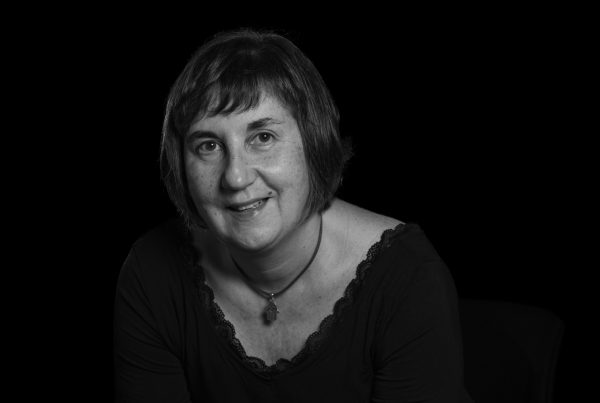
I am an archaeologist, with a PhD in Geography and History (1995) for the University of Barcelona. From 1996 to 1998 I was a postdoctoral researcher at the CNRS (Lattes, France). From 1999 to 2003 I had different postdoctoral positions at the University of Barcelona where I combined research with teaching tasks and spent research periods in France. In 2004, I took a position at the ICAC. I joined ICREA in 2006 as a researcher and became an ICREA Research Professor in 2010. I currently lead the Protohistory Archaeology team at the ICAC. I have conducted fieldwork in Spain, France, and Tunisia. I made stays as an invited researcher at the Universities of Chicago and Montpellier. In 2013, I received a Positive Assessment from the AQU Catalunya (Catalan Evaluation Agency) in order to apply for a University Full Professor position. Since 2019 I have been Academic Supervisor of the Advanced Training Area at the ICAC. Since 2023 I am a member of Institut d'Estudis Catalans.
Research interests
My research's general goal is to study the processes that transformed the local-scale groups of the Late Bronze Age into the complex societies of the Western Mediterranean Iron Age. Within this general goal, I deal with more specific topics such as urban planning, architecture, household organisation, domestic activities, and funerary practices and rituals. Since 2020, I have been conducting the TRANSCOMB Project, funded by the Spanish Ministry of Science, renewed in 2023 (TRANSCOMB-2). Within this project, an interdisciplinary methodology for studying fire installations in the Iron Age societies of the Western Mediterranean has been implemented. It aims to gather information on the use of fuels, natural resources management, daily activities related to fire, and household organisation. Also, in 2025, I started an archaeological project at the archaeological site of Sidi Saïd (Siliana, Tunisia), the only Numidian site without a later occupation that has been explored so far.
Selected publications
- Belarte MC, Mateu M, Pecci A, Pescini V, Gomar A, Portillo M, Saorin C, Sanchiz AF, Quiles MP, Morer J, Asensio D, Menéndez P, Noguera J, Balada MS, Parellada CS & Serret IC 2025, 'Construction, use and maintenance of hearths in Iberian Cesetania (5th-3rd cent. BC): Microcontextual case studies', Spal, 34 - 1.
- Mateu M, Belarte MC, Gomar A & Portillo M 2025, 'Investigating dung fuel use in the Iron Age through microarchaeology. An experimental programme', Delhon C., Gourichon L & Martin L (ed), Dung, manure and guano: garbage or brown gold? Status, use and management of animal dung since prehistoric times: archaeological and paleoenvironmental potential. 44es Rencontres Internationales d’Archéologie et d’Histoire, Nice, pp 207-218.
- Belarte MC 2025, 'La investigación sobre la arquitectura de tierra en la Protohistoria entre el Ebro y el Hérault: aproximaciones metodológicas y estado de la cuestión', La arquitectura de tierra en el Mediterráneo antiguo: perspectivas, estrategias y metodologías para su estudio arqueológico. MYTRA 15, Instituto de Arqueología de Mérida, Mérida, pp 303-314.
Selected research activities
PI: Estudio transdisciplinar, experimental y etnoarqueológico de estructuras de combustión en el Mediterráneo occidental durante la protohistoria (1er milenio a.C.) (PID2022-137999NB-I00)
PI: El territori de Cessetània occidental al primer mil·lenni aC: del bronze final a la romanització (CLT009/22/00012)
PI: En busca de los orígenes de la civilización númida: excavaciones y prospecciones en Sidi Saïd (Siliana, Túnez). Fundación Palarq
Main organiser of the session ‘Hearths, Ovens and Cooking Spaces in the Mediterranean from the Late Prehistory to the Middle Ages’, 31st European Association of Archaeology (EAA) Annual Meeting. Belgrade, Serbia (Virtual). 2025/09/04
Member of Institut d'Estudis Catalans.
Professor of the Master's Degree in Applied Classical Archaeology. URV-UAB-ICAC.
Academic Supervisor, Advanced Training Area at the ICAC.