

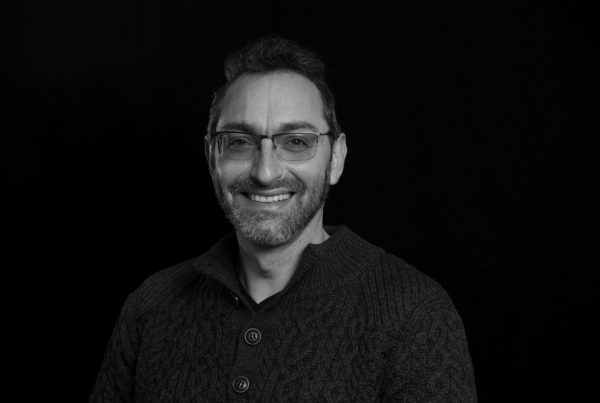
I always liked computers, so I first studied Mathematics and Computer Science (1993-1997) and I worked as a software engineer (1997-2004). But humans also fascinate me, so I started studying Psychology (1996-1998) and I hold an MSc in Neurobiology and Behaviour (2000-2002). In 2007 I obtained a PhD in Linguistics from the University of Edinburgh (2004-2007), followed by a series of postdoctoral positions in Edinburgh (ESRC UK, 2007-2008) and at the Max Planck Institute for Psycholinguistics in Nijmegen (2008-2017), the latter including an NWO VIDI grant (2012-2017). In 2017 I moved to Lyon, first as EURIAS Fellow of the Collegium de Lyon (2017-2018) and then as an IDEXLyon Fellow with the Laboratoire Dynamique du Langage, Université Lyon 2 (2018-2021), where I obtained my Habilitation (2021). In October 2021 I became ICREA Research Professor with the University of Barcelona.
Research interests
My research is quite diverse, including the processes that shape linguistic diversity, the origins and evolution of language in the context of human evolution, and the application of quantitative and computational methods to the language sciences. In particular, I have been focusing on studying the influence of non-linguistic factors on linguistic diversity, such as the effect of vocal tract anatomy on phonetics and phonology, the effect of the bio-physical environment on language spread and on the color vocabulary, and of population genetics on linguistic tone, using statistics and computer modelling. I have been arguing that language and speech are an old feature of our evolutionary lineage, being shared, in some form, with our cousins, the Neanderthals and the Denisovans. My current interests center around linguistic complexity, phylogenetics and causality applied to cross-linguistic data, and the foundations of probability and statistics as used in the language sciences.
Selected publications
- Anselme R, Pellegrino F & Dediu D 2025, 'Not just the alveolar trill, but all "r-like" sounds are associated with roughness across languages, pointing to a more general link between sound and touch', Scientific reports, 15 - 1 - 12930.
- Dediu D, Koptjevskaja-Tamm M & Sinnemäki K 2025, 'Replication, robustness and the angst of false positives: a timely target article and its multifaceted comments', Linguistic typology. vol.29, no.3, pp 459-462.
Selected research activities
2025 was an intense scientific year, not only because of the various invited and plenary talks (including my first ever in Catalan!), supervision, mentoring, and behind-the-scenes data analysis and methodological developments, but because I have finally been able to dedicate research time to explore in-depth how probability, statistics and causality are actually used in cross-linguistic research, and how to properly interpret their results, something I have always been interested in, and that may shape my research for years to come.