

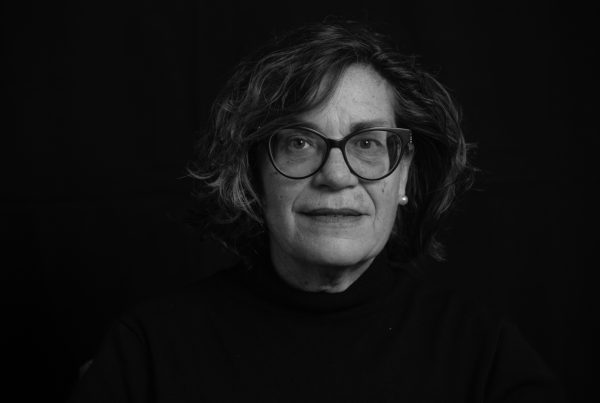
Maria Garcia-Parajo received her PhD in Physical Electronics in 1993 at Imperial College, London, UK. After postdocs at the L2M-CNRS, Bagneux, FR and U. Twente, NL, she became permanent staff member at the OT group of U. Twente in 1998. In 2005 se moved to Barcelona as ICREA Research Professor, first hosted at the IBEC - Institute for Bioengineering of Catalonia and since July 2011 at ICFO-Institute of Photonic Sciences, leading the Single Molecule Biophotonics group. She coordinates several international research projects and has been a member of the executive board of the Spanish Biophysical Society and the International Fluorescence Society. She has received several prestigious awards, including the Advanced grant of the HFSP (2012), Bruker National Prize in Biophysics (2017), Advanced ERC grant 2017 and Emmy Noether Laurate, European Physical Society (2020). Maria is actively involved in (inter)national actions to promote gender equity in Science.
Research interests
Our main goal is to decipher how spatiotemporal compartmentalisation of the plasma membrane in living cells tunes cell function, a fundamental question with major implications for health and disease. Intriguingly, most membrane receptors organise in well-defined nanoclusters that sense biochemical and/or mechanical signals and transduce this information through signalling pathways for appropriate cell response. To study these events in real time we combine multi-colour single molecule and super-resolution imaging with quantitative analysis and simulations. We exploit mechano-sensitive and photo-switchable fluorescent probes to map the mechanical properties of the plasma membrane while monitoring molecular interactions at different spatiotemporal scales. Using these tools, we aim at understanding how extracellular mechanical inputs control the dynamic nanoscale organisation of different receptors in the plasma membrane, their influence in mechanosignalling and final cell response.
Selected publications
- Herkert EK & Garcia-Parajo MF 2025, 'Harnessing the Power of Plasmonics for in Vitro and in Vivo Biosensing', Acs photonics, 12 - 3 - 1259 - 1275.
Selected research activities
1. Chair of evaluation panel ERC- Life Sciences (LS1), Advanced Grants, European Research Council.
2. Member of the Scientific Advisory Board of the Rudolf Virchow Center – Center for Integrative and Translational Bioimaging (RVZ), University of Würzburg, Germany.
3. Member of the Scientific Advisory Board of the Dioscuri Centre for Single-Molecule Optics, Institute of Physics of the Czech Academy of Sciences, Czech Republic.
4. Faculty Advisor of the ICONS-Young minds organization at ICFO & EPS (Young Minds).
5. Editorial Board of Biophysical Journal, Cell Press
6. Associate Editor Advances in Optics and Photonics, Optica publishing group
7. Ten invited talks and plenary lectures in 2025 and member the scientific organizing committee of three different international conferences.