

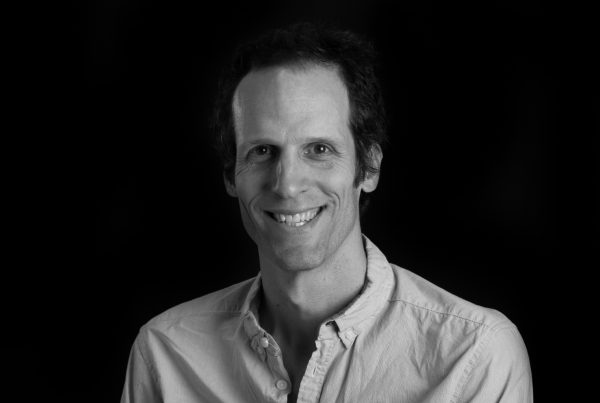
I earned my MSc in 1998 from the University of Buenos Aires, where my research focused on measuring the production cross-section of direct photons at the DØ experiment (Fermilab, USA). Prior to my PhD, I was a member of the Astroparticle Group at the Royal Institute of Technology (KTH) in Sweden, studying cosmic rays. My doctoral research, also conducted at DØ, involved measuring the properties of quarks and gluons in high-energy collisions. In 2003, I joined Harvard University as a postdoctoral fellow, focusing on top-quark physics and detector operations for the CDF experiment at Fermilab. I joined the IFAE (Institut de Física d’Altes Energies) LHC-ATLAS group in 2008 as an ICREA Researcher and was appointed ICREA Research Professor in 2012. Currently, I lead the ATLAS detector upgrade effort at IFAE and explore the use of novel semiconductor detector technologies for medical applications.
Research interests
My career has centered on experimental high-energy particle physics, focusing on the fundamental constituents of nature and their interactions. At the Fermilab Tevatron, I conducted in-depth studies of QCD and the properties of the top quark. I later transitioned to the Large Hadron Collider (LHC) at CERN, where I led searches for new physics within the top quark sector. Currently, I lead a project developing cutting-edge semiconductor tracking and timing detectors for the ATLAS experiment. This work resulted in the successful integration of 3D pixel silicon sensors—designed and produced in Barcelona—into the innermost layer of the ATLAS detector. We are now producing 3D pixel modules for the High-Luminosity LHC upgrade. Additionally, my group is heavily involved in the ATLAS High Granularity Timing Detector (HGTD), with the goal of producing 10% of its modules in-house. I have also coordinated several projects exploring the use of silicon sensors in the medical field.
Selected publications
- ATLAS Collab. 2025, 'The quest to discover supersymmetry at the ATLAS experiment', Phys. Rept., 1116, 261.
- Gan Y, Casanova R, Degerli Y, Guilloux F, Grinstein S, Meyer JP, Schwemling P & Huang G 2025, 'A methodology for timing performance optimization of the pre-amplifier design in High Energy Physics', Journal of instrumentation, 20 - 1 - C01004.
- Gan Y, Casanova R, Degerli Y, Guilloux F, Grinstein S, Meyer JP, Schwemling P & Huang G 2025, 'The first test-beam results of MiniCACTUS-V2: an ASIC prototype with 60 ps time resolution and a fast recovery time', Journal of instrumentation, 20 - 4 - C04013.
- Schwemling P, Casanova R, Degerli Y, Gan Y, Grinstein S, Guilloux F, Hemperek T, Huang G & Meyer JP 2025, 'Development of non amplified depleted MAPS sensors towards 50 ps timing resolution on charged particles', Journal of instrumentation, 20 - 6 - C06048.
Selected research activities
- Directed two PhD theses: Y. Gan, "MiniCACTUS-V2: A DMAPS Prototype for Timing in High Energy Physics Experiments", UAB, July 2025, and J. Carlotto, "3D Silicon Sensors and Module Assembly for the ATLAS ITk Pixel Detector", UAB, September 2025.
- Currently directing or co-directing five PhD students.
- Chair of the Local Organization Committee of the "2025 European Edition of the International Workshop on the Circular Electron-Positron Collider (CEPC)", Barcelona, June 2025.
- Principal investigator of the ATLAS-Upgrade group at IFAE (MICIU, Spain).
- AIDAInnova WP5 co-coordinator (H2020, EU) until Sept 2025.
- Deputy Project Leader of the ATLAS High Granularity Timing Detector (2021 - 2025).
- HGTD Module Assembly co-convener (since 2018).
- Member of the Project Management Office sub-committee for the ATLAS Muon System (since 2021).
- Referee for publications in NIM A, Proceedings of Science (PoS), JINST and Frontiers.
- Referee for funding programs in Spain (ANEP), UK (STFC) and Argentina (ANPCYT).