

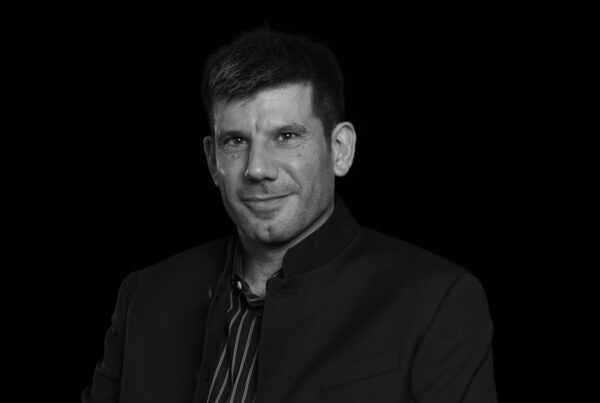
Hèctor A. Orengo is an ICREA Research Professor at the Barcelona Supercomputing Center, where he leads the Computational Humanities Section and directs the Computational Research in Archaeology Group (CoRArch). He obtained his PhD from the Rovira i Virgili University in 2010 and, since then, he has developed research at the GEOLAB (UMR 6042) in France, the Universities of Nottingham, Sheffield and Cambridge in the UK, and the Catalan Institute of Classical Archaeology in Spain. His research has focused on long-term human-environment interactions and the development of computational methods to address archaeological problems.
Research interests
Hèctor’s research has mainly focused on the analysis of human-landscape dynamics in Mediterranean environments and beyond. He has developed extensive research on computational archaeology that includes, but is not restricted to, GIS and remote sensing techniques, field survey, and site detection methods. He is currently working on the application of machine learning to archaeological research using cloud computing and big data sources (mostly multisource multitemporal satellite data, drone imagery and lidar).
Selected publications
- Berganzo-Besga I, Orengo HA, Lumbreras F & Ramsey MN 2025, 'Deep learning black box and pattern recognition analysis using Guided Grad-CAM for phytolith identification', Annals of botany. Volume 136, Issue 2, Pages 355–366.
- Petrie C A, Jabbar J A, Abhayan G S, Alam A, Berganzo-Besga I … Vidyarthi V 2025, 'Hidden in Plain Sight: The Unrecognized Contribution of the Survey of India in the Documentation of Ancient Settlements in Pakistan and India', Journal of Field Archaeology, 1–22.
- Diffey C, Styring A, Orengo HA, Athanassiadou A, Bessios M, Morris S, Noulas K, Papadopoulos J, Livarda A 2025,'Late Bronze – Early Iron Age Agro-systems in Northern Greece: New Insights Through Stable Isotope Analysis from Methone, Pieria', Environmental Archaeology, 1–14.