

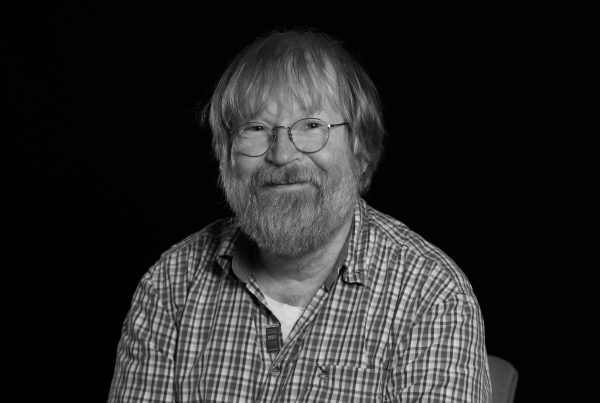
Thomas Surrey obtained his PhD in Biochemistry from the University of Tübingen in 1995. After postdoctoral training at Princeton University and the EMBL Laboratory in Heidelberg, he became group leader at EMBL. In 2011, Thomas moved to the CRUK London Research Institute (LRI) to take the position of a senior group leader and later transferred to the newly established Francis Crick Institute in London. In 2019, Thomas relocated to the Centre of Genomic Regulation (CRG), a part of the BIST, to take the position as a CRG senior group leader and ICREA research professor. Thomas is author of 100 research publications, elected EMBO member (2012), recipient of an ERC Advanced Grant (2013) and an ERC Synergy Grant (2021) and of the Hooke medal of the British Society of Cell Biology (2015). He was a Whitman Center Fellow at the Marine Biology Laboratory (MBL) in Woods Hole in 2016 and a Visiting Miller Professor at UC Berkeley in 2018. In 2021, he was selected as an ASCB Fellow.
Research interests
Living cells are internally highly organized, yet also very dynamic. How is dynamic order generated? The cytoskeleton plays a critical role in this process by forming an active filament network that provides a mechanically stable coordinate system for the internal organization of cells. The Surrey lab studies the properties of the microtubule cytoskeleton with a particular interest in its ability to organize itself into different networks in different cell types or at different times of a cell's life cycle. The Surrey lab has pioneered several biochemical in vitro reconstitution approaches in which minimal cytoskeletal subsystems can be generated from purified components. Observing the behaviour of these reconstituted systems by advanced fluorescence microscopy provides insight into the molecular mechanisms underlying cytoskeleton dynamics and function. Our goal is to uncover the design principles governing active biological network organization which is essential for cell function.
Selected publications
- Colombo S, Michel C, Speroni S, Ruhnow F, Gili M, Brito C & Surrey T 2025, 'NuMA is a mitotic adaptor protein that activates dynein and connects it to microtubule minus ends', Journal of cell biology, 224 - 4 - e202408118.
- Chew WX, Nédélec F & Surrey T 2025, 'Molecular design principles for bipolar spindle organization by two opposing motors', Proceedings of the national academy of sciences of the united states of america, 122 - 12 - e2422190122.
- Estévez-Gallego J, Blum TB, Ruhnow F, Gili M, Speroni S, Garcia-Castellanos R, Steinmetz MO & Surrey T 2025, 'Hydrolysis-deficient mosaic microtubules as faithful mimics of the GTP cap', Nature communications, 16 - 1 - 2396.
Selected research activities
Invited seminars at conferences & workshops
10-11/07/2025: Artificial Evolution Summer School 2025 at Tsinghua University, Beijing, China.
12-13/07/2025: Symposium on Cell Structure and Dynamics at Tsinghua University, Beijing, China.
7-9/10/2025: Cell Physics Conference at Center for Biophysics, University of Saarland, Saarbrücken, Germany.
Courses and seminars
19/06/2025: Invited seminar at CSIC Margarita Salas Center for Biological Research (CIB), Madrid.
23/06/2025: Invited seminar at Institut Curie, Orsay, France.
11/09/2025: Technical University Delft, The Netherlands.
Conference organization
Co-organizer of 3rd DivIDE Conference "Behind Division: Untangling the Molecular Threads of Life" (22-25 September 2025)
Jury member of PhD thesis defense
24/01/2025: Nuria Prat Oriol, Universitat Pompeu Fabra, Barcelona, Thesis title: The KANSL complex, an epigenetic regulator with microtubule binding properties in mitosis
23/06/2025: Arya Krishnan, PSL University, Paris, France, Thesis title: The role of post-translational tubulin modifications in generating distinct recognition patterns for microtubule-associated proteins.
12/09/2025: Yash Jawale, Technical University Delft, The Netherlands, Thesis title: Building minimal spindles: Reconstituting spindle positioning in synthetic cells.