

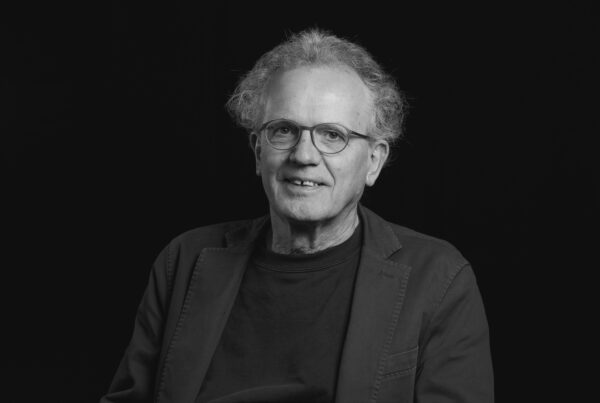
Educated in economics, political science and sociology in Hamburg, London and Berlin, Peter Wagner joined ICREA in 2010. Before, he was Research Fellow at the Wissenschaftszentrum Berlin für Sozialforschung (1983-1995), Professor of Sociology at the U of Warwick (1996-2006) and the U of Trento (2006-2010) as well as Professor of Social and Political Theory at the European University Institute in Florence (1999-2006). Furthermore, he was project director at Ural Federal University, Ekaterinburg (2018-2020), and held visiting positions at the University of Hamburg (2019-20), Université de Paris 8 (2011); U catholique de Louvain-la-neuve (2009-10); U of Cape Town (2009-10); EHESS, Paris (1998; 2001); U of California at Berkeley (1996; 1997); Swedish Collegium for Advanced Study, Uppsala; Institute for Advanced Study, Princeton (1990-91), among others. He is chair of the Academia Europaea section "Social change and social thought" and of the Task Force Environment, Climate, Sustainability.
Research interests
Peter Wagner’s research is based in comparative historical and political sociology, social and political theory, and sociology of the social sciences. It focuses on the identification and comparative analysis of different forms of social and political modernity and of the historical trajectories and transformations of modern societies. Initially applied to a comparative political sociology of European societies, the research programme has been elaborated further towards a “world-sociology”, focusing on Latin American, Southern African and more broadly BRICS societies in terms of global connectedness. From 2022, he has also led the research cluster “Modernity in Central Asia” at U ofA Central Asia. Analyzing the persisting tensions between struggles for autonomy and forms of domination, it explores in the light of historical experiences in different world-regions the current possibilities of progress, not least in the face of human action reaching and exceeding planetary boundaries.
Selected publications
– Wagner P 2024, Carbon Societies. The Social Logic of Fossil Fuels, Cambridge: Polity Press.
– Wagner P & Social Imaginaries Collective 2024 “Thinking with and beyond Castoriadis. Conversation with Peter Wagner“ International Journal of Social Imaginaries, vol. 3 no. 2, pp. 287-302
– Wagner P 2024, “À quelle époque vivons nous?“, Les Temps qui restent, no. 1 (online),
– Wagner P 2024, Social theory, the ecological emergency and the direction of history, European Journal of Social Theory
Selected research activities
Is there a relation between human freedom – personal freedom but also economic and political freedom – and increasing use of biophysical resources, in particular fossil fuels? This is the question in the centre of Peter Wagner’s current research programme, of which he completed the first major phase during 2024. He developed an alternative historical sociology of modernity and capitalism that places biophysical resources and the normative principles of freedom and emancipation alongside each other in the centre of world-history. This phase was completed with the publication of the book Carbon Societies. The Social Logic of Fossil Fuels (Cambridge: Polity Press) in June 2024. Subsequently, Wagner’s research focussed on issues that follow up on the preceding analysis, such as ecology and society in specific world-regions, the interdependence of “petro-states” and “carbon societies”, and the changing meanings of autonomy and freedom in relation to resource use since the Enlightenment. In parallel, he co-organized a workshop series on “Approaches to the ecological emergency” at the University of Barcelona bringing together social scientists working on ecological issues from different angles.